
Field of Emergence
Gesture & Emergence Practice
Watercolors of gesture and breath, where form appears through motion, water, and trace.
Works developed through 2024, following Moments Framed, preparing the present practice.
About
The voice that steps forward from the chorus to carry its direction — names a body of watercolor work centered on emergence through gesture. These paintings draw from the symbolism of the ensō, the open circle in Japanese practice, understood not as ornament but as experiential form: a trace of breath, an event of presence, an unfinished unity. Each work engages water, pigment, and duration as active agents. The project approaches aesthetics as an inquiry into perception — not illustration, but the shaping of conditions in which form becomes perceptible.
Between Bloom and Break
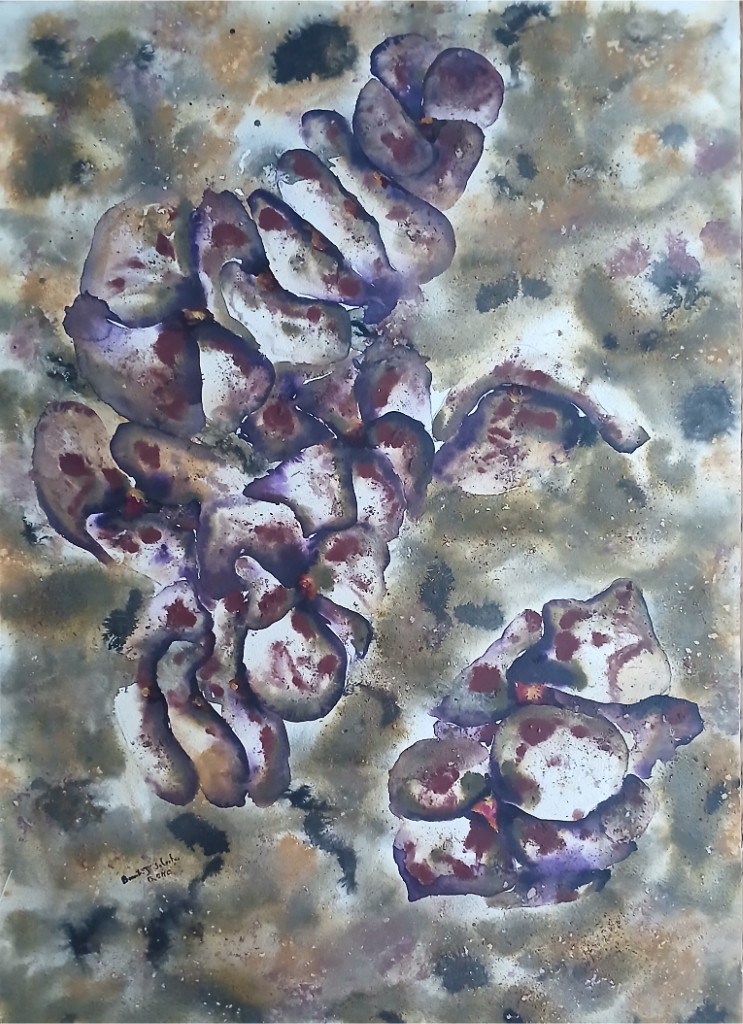
This work investigates organic emergence — forms hovering between bloom and breakdown within a reactive, atmospheric surface.The process privileges material response over control, aiming for presence and sensation rather than fixed representation.
This piece builds a charged circular field where dark structure meets falling bands of light and fluid color.
The image emerges from negotiated control — a presence discovered through process, not predetermined design.
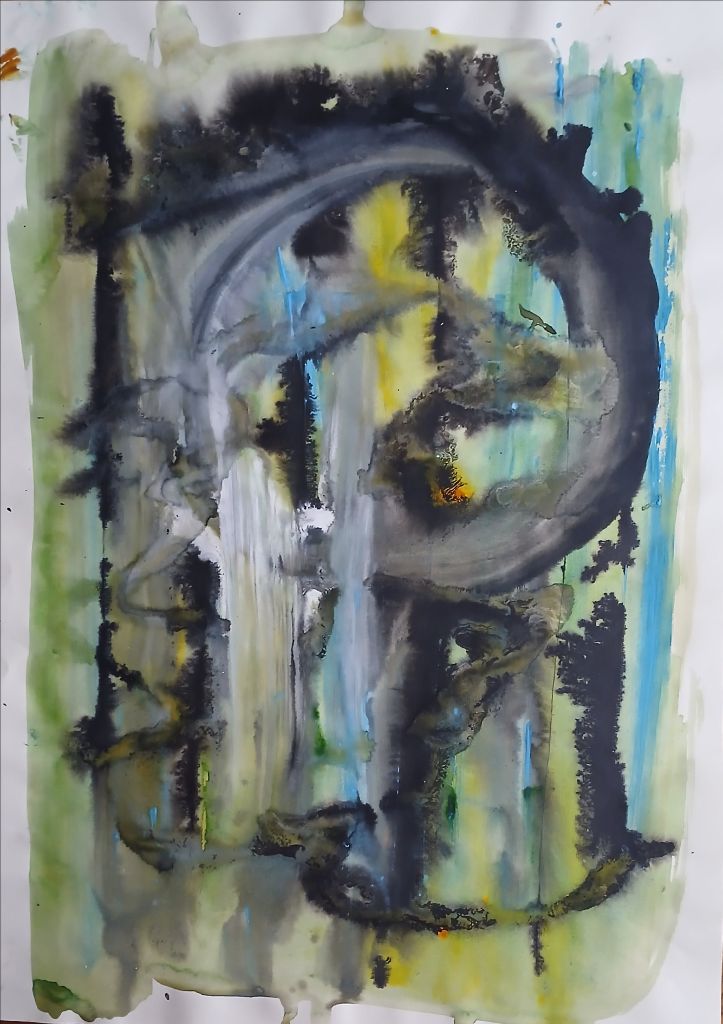
Held and Broken
These two paintings are conceived as a face-to-face dialogue between two phases of the same pictorial impulse: dispersion and gathering. The first pushes outward through fractured marks, ruptures, and chromatic surges, suggesting release and projection. The second introduces a sweeping, containing curve that doesn’t close the space but stabilizes and redirects its energy.
Vertical drips make time visible on the surface — gravity, duration, and process become part of the composition.
Dark ink bursts operate like intensity nodes, reorganizing the surrounding color field. Moving from one piece to the other, the viewer experiences a shift from explosive distribution to held tension.
Together, the works function like a breathing structure — expansion, pause, consolidation. Rather than telling a story, they map forces and transitions. Form is not illustrated; it is discovered as a byproduct of action, resistance, and adjustment within the material.
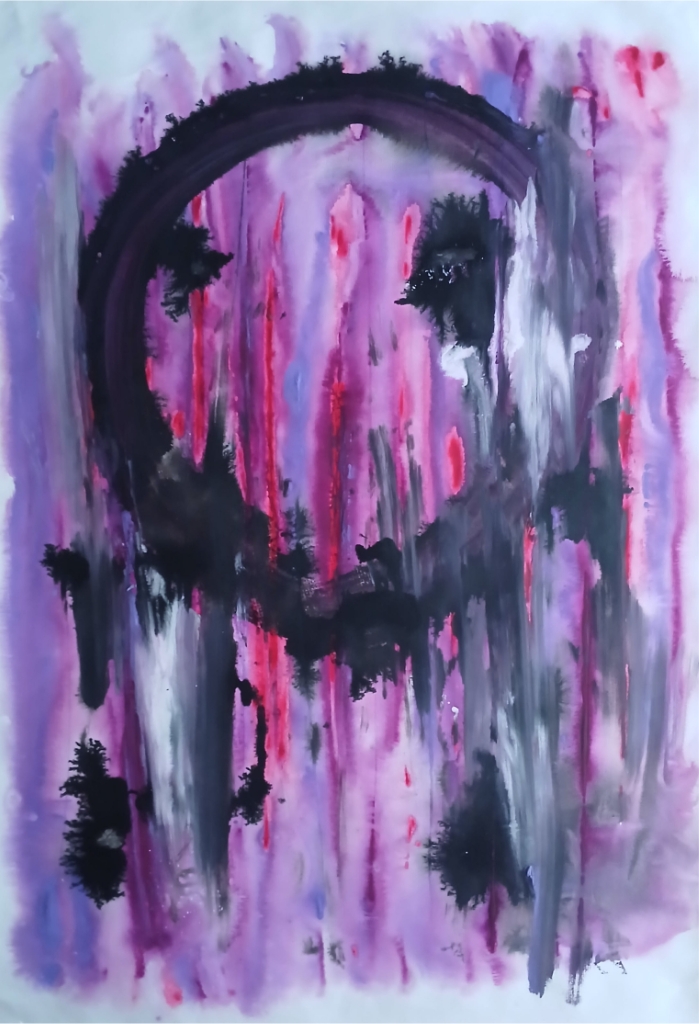
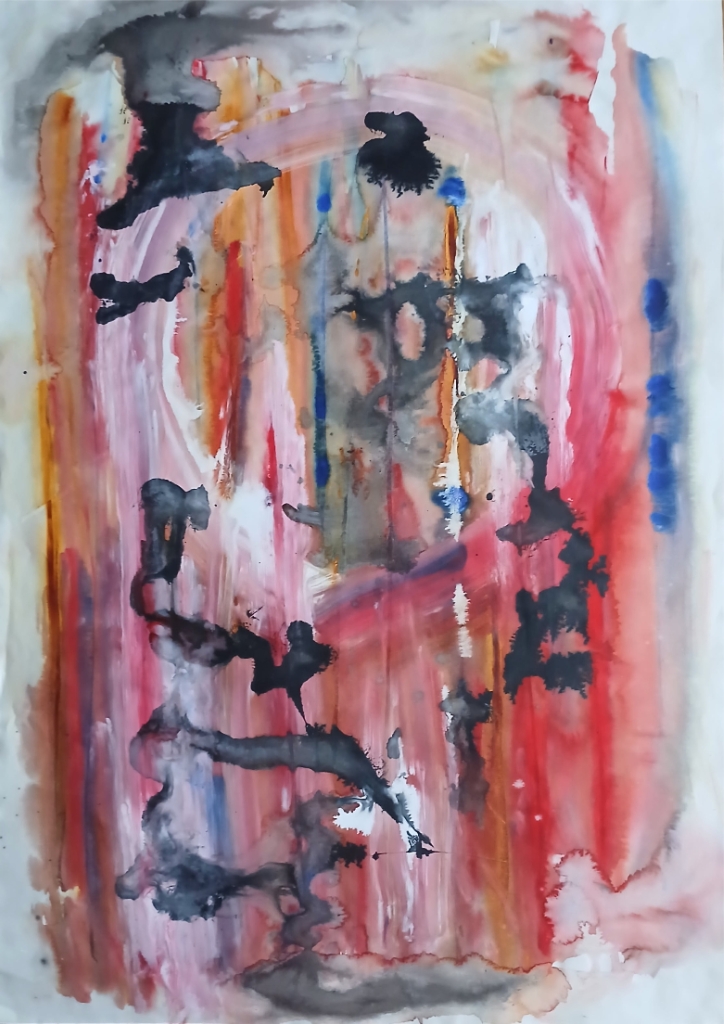
Gesture in the Round
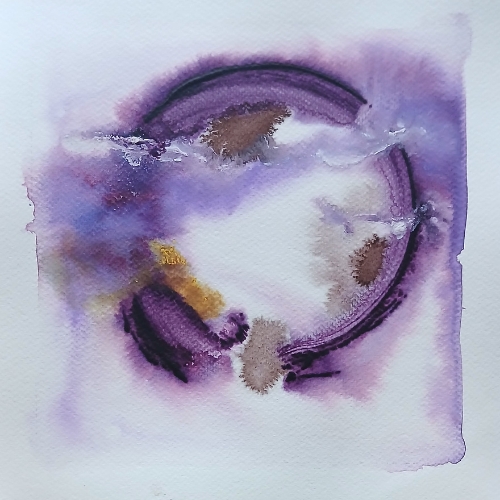
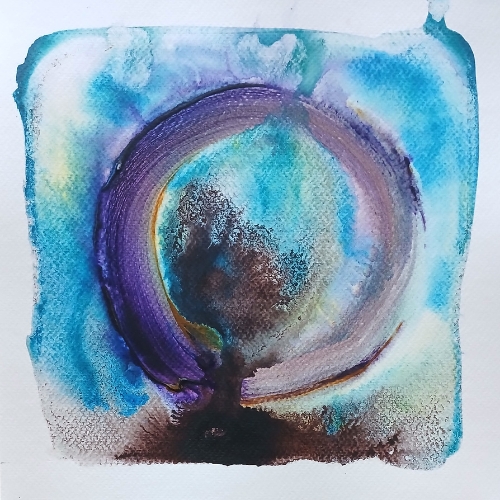
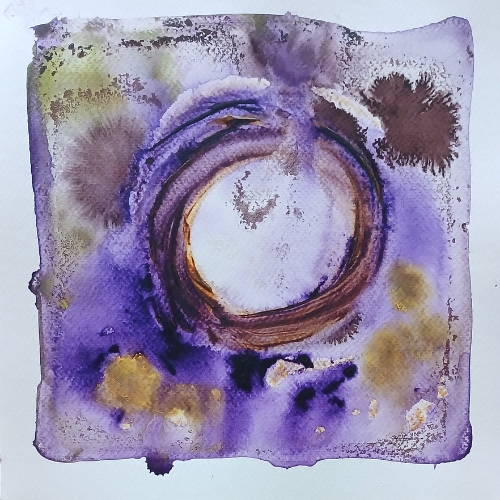
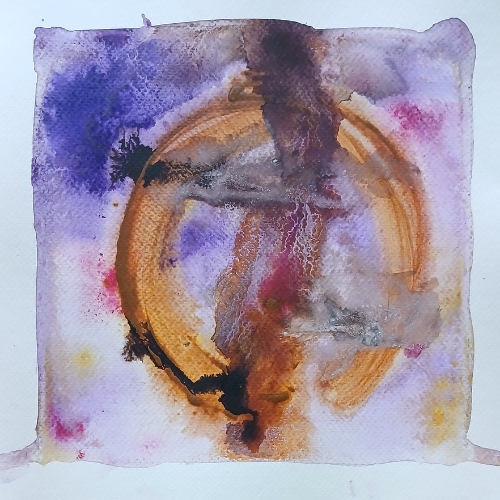
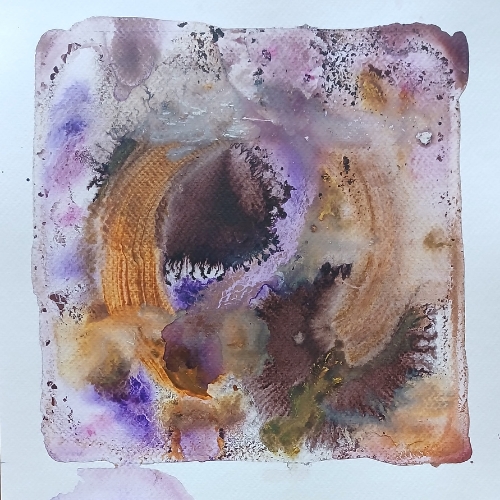
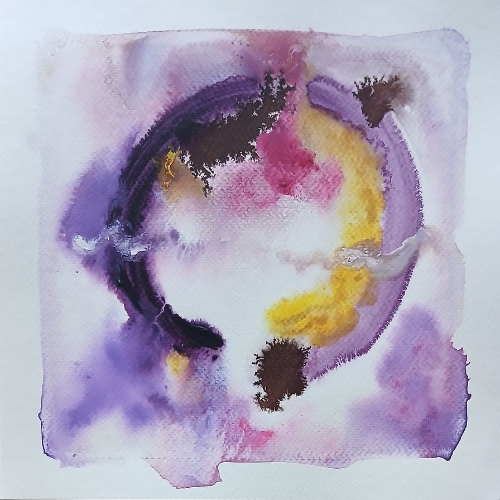
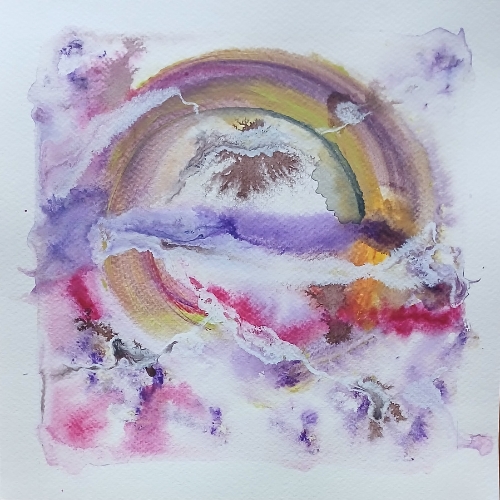
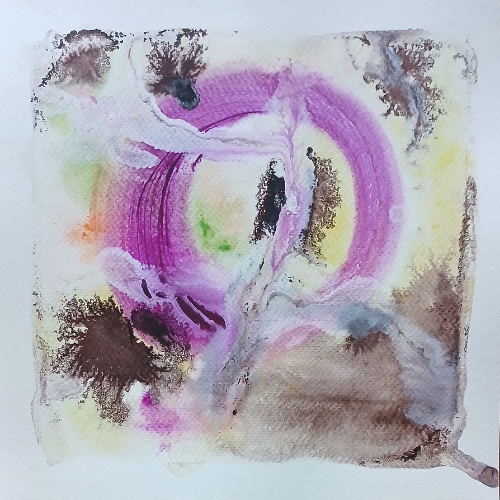
This series brings together multiple variations built on a shared gestural principle: the open circular form, treated as an ongoing practice rather than a fixed motif. Each piece tests a different modulation of the circle — arc, rotation, return — where color and material behavior shift from work to work. The circle is never symbolic closure; it functions as a field of emergence.
Washes, blooms, and granular textures create distinct atmospheres connected through process. Repetition here is not reproduction but re-articulation — each work a new instance of the gesture under changing conditions. Seen together, the paintings read like a breathing sequence — expansions, contractions, interruptions — where form is approached as an event, not a finished image.
Holding the Open
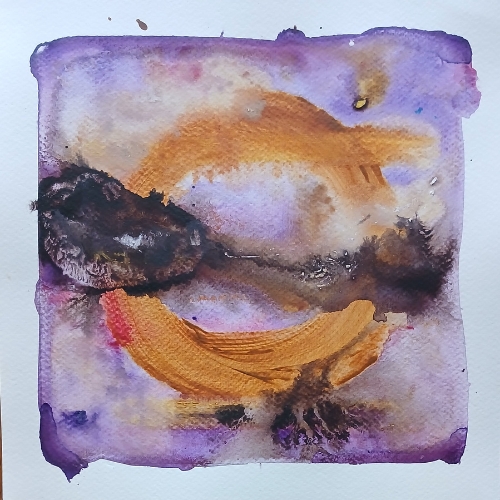
This painting comes out of a process-driven approach where motion leads and image follows. A sweeping curved mark sets the energy in play, while darker textures interrupt and redirect the flow. The surface records friction, hesitation, and release.
I’m interested in keeping the work unresolved — holding it in a state of active formation rather than closure. The gesture functions as a catalyst, not a description. What matters is the lived movement in the paint, and the space it creates for perception rather than narrative.
Arc of Emergence
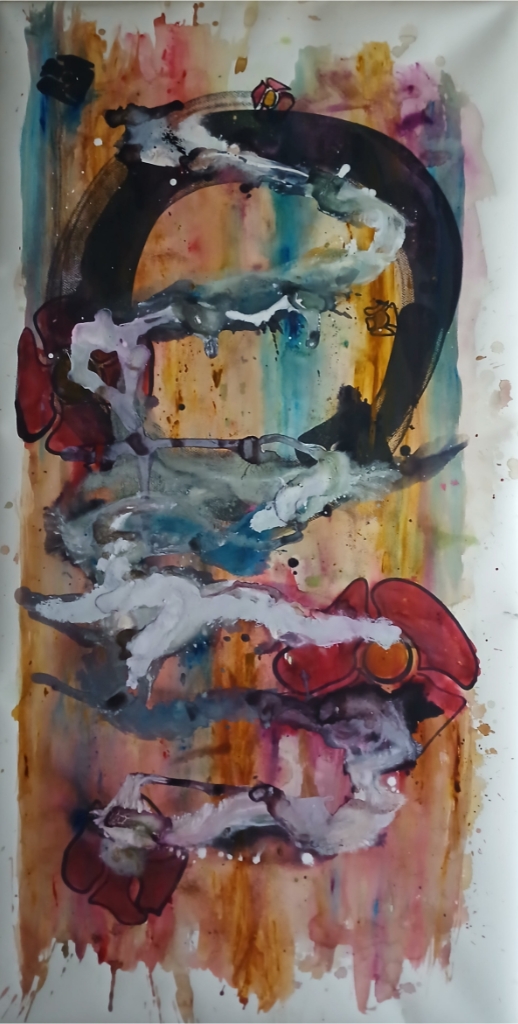
This work grows from the spirit of the ensō: an open circle drawn like a breath — not to enclose form, but to invite it into presence. The central arc becomes a field of emergence rather than a boundary.
Unstable figures surface through washes and flows of pigment, hovering between appearance and disappearance. Vertical layers of color act as a silent chorus, from which a leading voice rises — an echo of the coryphaeus — a passage from the many toward the one.
Painting here is an act of listening: allowing the image to arrive, rather than forcing it to exist. A form becoming, not fixed.